
We recently experienced summer-like weather in New Jersey when it was supposed to be spring. It is not just in New Jersey but globally people are seeing and feeling the difference in temperature and in their environments. To understand why this is happening, just for a brief moment, let us go back to school.
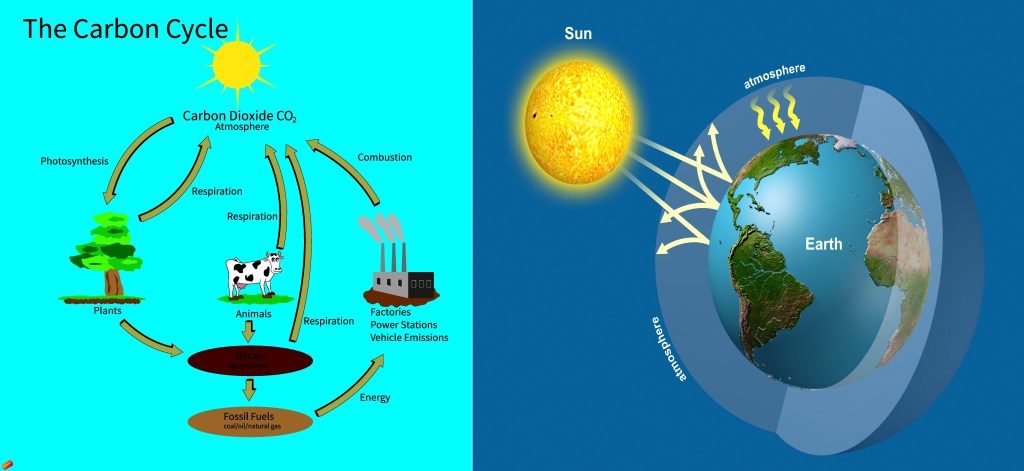
Remember these two nice little carbon cycle and greenhouse effect diagrams? It talks about the transfer of carbon dioxide from one reservoir to another creating a carbon cycle allowing sustenance on Earth. We are all made up of carbons. In the atmosphere, carbon exists as carbon dioxide, an important greenhouse gas that helps trap heat. Natural sources of emission of carbon are the air, oceans, plants, rocks and fossil fuels. CO2 gets absorbed from the atmosphere by photosynthesis by plants and oceans and by absorption of organic matter by soil that gets converted to fossil fuel such as coal. Most of the greenhouse gases emitted in the environment are absorbed by reservoirs like plants and oceans but some amount of it still remains in the atmosphere. Carbon dioxide, Methane and Nitrous oxide are the greenhouse gases that helps trap and re-emit infrared radiation (heat). The heat gets reflected at different directions, which comes back to Earth creating a greenhouse effect. This greenhouse effect is beneficial for sustenance of life on Earth otherwise the planet will be a frozen ball. The more concentration of the greenhouse gases in the atmosphere, the warmer our Earth becomes and the lesser the concentration of greenhouse gases, the colder the Earth becomes.
Bio-capacity Deficit
The biggest contribution of CO2 in the atmosphere is by humans burning fossil fuels – coal, oil and natural gas. Deforestation for newer developments and agricultural plantations have also added to the CO2 increase in the atmosphere. Agricultural byproducts release Methane emissions which are more harmful than CO2 in the first 20 years of getting released into the atmosphere. This has disrupted the natural greenhouse effect and Earth has become warmer and warmer leading to global warming that is working against the laws of nature.
We are consuming the natural resources of our planet more than its ecological bio-capacity leading to a deficit. An insightful study is the data provided by Global Footprint Network. The ecological deficit/reserve data depicts the difference between bio-capacity of a region and the ecological footprint of that region, which includes consumption and trade.
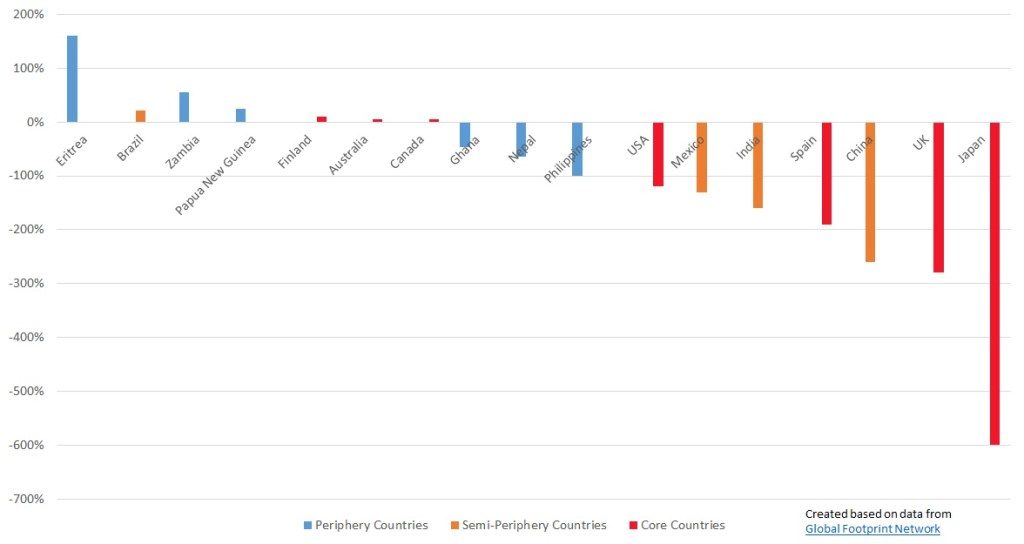
While it is true that core countries such as Japan, UK, USA have a larger footprint, semi-periphery countries seem to over-shoot its bio-capacity reserves. One of the striking data points is the bio-capacity deficit of Israel and Singapore, each at -1700% and -16000% respectively. Though the ecological footprint of the countries (Singapore at 8 and Israel at 6.2 global hectares per capita) are much lesser than USA or Canada (8.2 global hectares per capita), the bio-capacity per capita puts the countries at a disadvantage. Canada has a bio-capacity of 16 global hectares per person whereas Singapore is the lowest with just 0.1 global hectares per person making Canada a country with an ecological reserve. The periphery countries have a distributed bio-capacity reserve and deficit though most of them are fast depleting their resources.
If this continues, Earth will soon run out of resources and it will lose its regenerative capacity.
A shift in temperature
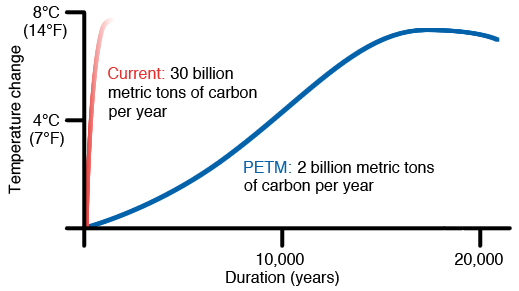 Earth has gone through global warming in the past but in the past, they were due to natural phenomenons such as volcanoes and fires which exist even now. And the natural phenomenon happened very gradually, temperatures rose 0.025°C per 100 years and CO2 emissions were 5 billion tons per year. Now, it is different. Due to increase in human consumption of fossil fuels and deforestation, the concentration of greenhouse gases in the atmosphere has rapidly increased, temperatures rising 1 to 4°C per 100 years and CO2 emissions around 30 billion tons per year!
Effects of global warming
Humans have been consuming large amounts of bio reserves and the effects of global warming are already felt. Glaciers and sea ice are melting, sea level is increasing, permafrost is melting, temperatures both in land and sea are increasing. Global warming is bringing a drastic climate change that can be catastrophic to the health of the society.
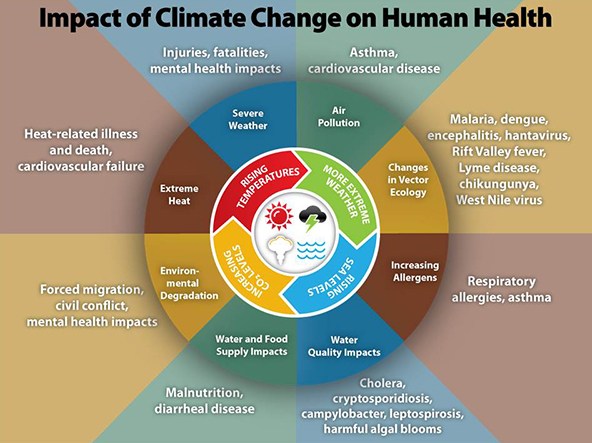
Some of the damages that we have done to our environment are irreversible. But that does not mean that the world will end tomorrow and this is definitely not some apocalypse. In all probability, our world will exist for many, many more centuries. The question is not about the existence of life but it is about the quality of existence of life.
- Would we heavily depend on harmful chemicals for our daily sustenance or would we choose toxic free alternatives?
- Would there be more diseases and more reliance on vaccinations and antibiotics or would the number of diseases come down?
- Would we continue to over-utilize fossil fuels for energy or would we use renewable energy?
- Would more species become extinct and endangered or would we enjoy a world of biodiversity?
- Would we prefer genetically modified food and organisms to natural and organic?
It is a choice. A choice that will impact our world now and for years and centuries from now. A choice for not just 1 individual but for 7 billion people to take.